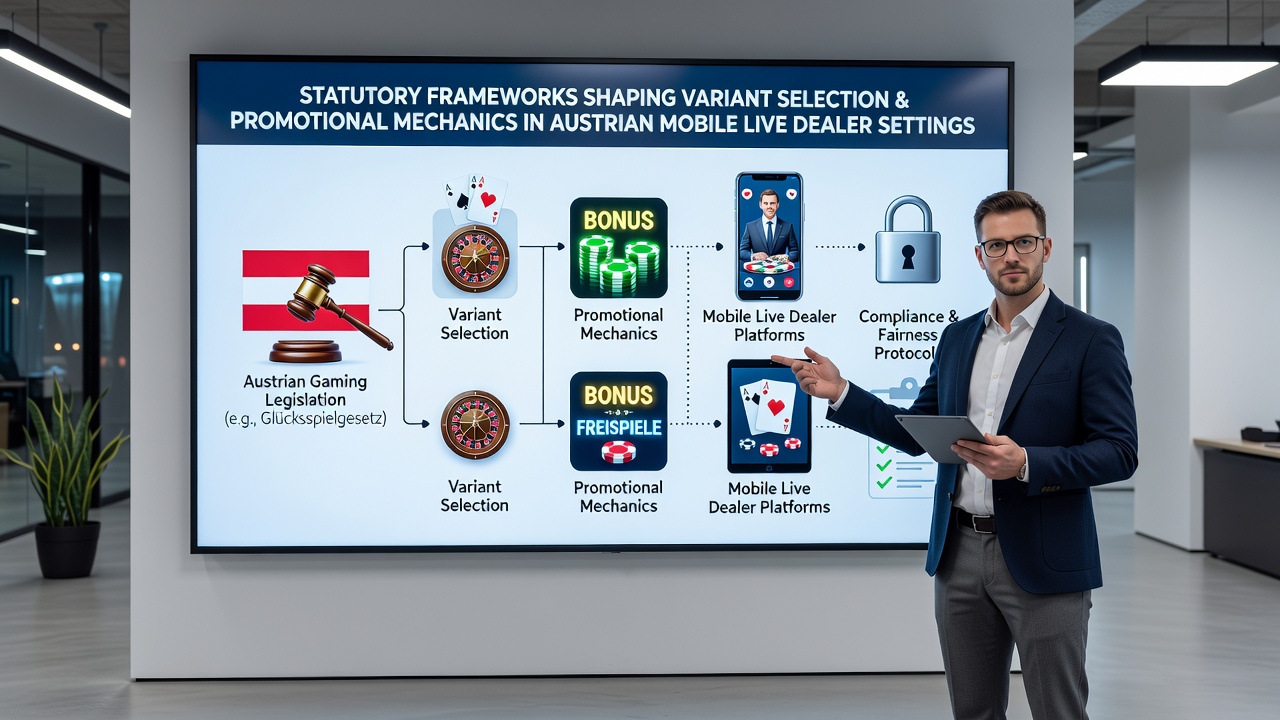
Statutory Frameworks Shaping Variant Selection and Promotional Mechanics in Austrian Mobile Live Dealer Settings
Austrian gambling statutes establish clear parameters for operators who run mobile live dealer platforms, and these rules directly determine which game variants reach players along with the structure of any promotional offers. The primary legislation, the Austrian Gambling Act, sets licensing conditions that require all live streamed tables to meet specific technical and operational standards before they appear on mobile devices, while separate provisions govern how bonuses and incentives can be advertised or delivered to users within the country.
Core Regulatory Provisions for Live Dealer Operations
Operators must obtain concessions from the Austrian authorities before offering live dealer games on mobile applications, and this process includes detailed reviews of game mechanics that influence variant availability. Data from regulatory filings show that approved variants typically feature standardized rules for card dealing speeds, camera angles, and player interaction tools, whereas non-compliant formats face exclusion from the licensed market. As amendments scheduled for August 2026 introduce updated technical specifications, platforms will need to adjust certain blackjack and baccarat variants to maintain compliance, particularly those involving side bets or multi-hand options that exceed current payout thresholds.
Influence on Game Variant Selection
Statutory language requires that every live dealer variant undergo testing for fairness and transparency before mobile deployment, which limits the range of custom tables that international providers can introduce to Austrian users. Observers note that this framework favors variants with fixed minimum stakes and transparent shuffle procedures, while excluding those with complex progressive jackpots unless they align with concession terms. Research conducted by European academic institutions indicates that such restrictions have led operators to prioritize core versions of roulette, blackjack, and poker derivatives that already satisfy national certification protocols, rather than experimental formats that would require lengthy approval cycles.
Live dealer environments on mobile further face device-specific rules around latency and security, which in turn shape the selection process toward variants optimized for smaller screens and touch interfaces. Figures from industry reports reveal that platforms often streamline their offerings to a core set of six to eight variants per game type to ensure consistent performance across iOS and Android ecosystems while remaining within statutory boundaries.
Promotional Mechanics Under Legal Constraints

Promotional activities in Austrian mobile live dealer settings operate under advertising and bonus regulations that mandate clear disclosure of wagering requirements and eligibility criteria. The rules prohibit promotions that target minors or use misleading language about win probabilities, which compels operators to design bonus structures with explicit time limits and contribution percentages tied to specific game variants. According to documentation from the European Commission on cross-border gambling services, these transparency measures have standardized how welcome bonuses and loyalty rewards function across licensed platforms, reducing the scope for variable free bet mechanics that appear in less regulated markets.
Operators frequently tie promotional credits to approved live dealer variants only, a practice that aligns with statutory demands for responsible gaming features such as deposit limits and session reminders. Evidence from regulatory audits shows that campaigns running in 2025 and into 2026 must incorporate real-time verification tools to confirm that bonus funds are applied solely to compliant tables, thereby linking promotional mechanics directly to the approved variant list.
Mobile-Specific Implementation and Oversight
Mobile delivery of live dealer content adds another layer of statutory oversight focused on data protection and geolocation verification. Austrian frameworks require continuous monitoring of player locations to prevent access from jurisdictions outside the licensed area, which affects how variant menus and promotional pop-ups are displayed on smartphones and tablets. Those who have examined compliance records note that operators integrate automated filters that restrict certain bonus triggers when users switch between Wi-Fi and mobile data networks, ensuring ongoing adherence to territorial rules.
Industry associations across multiple regions, including reports compiled by Canadian research centers on digital gaming, highlight that Austria's approach creates a more uniform environment for variant selection compared to markets with fragmented state-level rules. This uniformity extends to promotional delivery, where all offers must route through centralized account management systems that log every bonus activation for potential regulatory review.
Conclusion
Statutory frameworks in Austria continue to define the boundaries of variant selection and promotional mechanics for mobile live dealer settings through licensing conditions, technical standards, and advertising requirements. Updates planned for August 2026 are expected to refine these parameters further, particularly around mobile performance metrics and bonus transparency. Operators maintain compliance by aligning their game libraries and marketing tools with these evolving provisions, while regulatory bodies monitor adherence through ongoing audits and certification processes.